

A glossy coat and a good appetite are encouraging signs, but immune health is built long before you can see it. This cat immune support nutrition guide explains how everyday food choices help support your cat’s natural defenses, beginning with complete nutrition, a healthy digestive system, and a feeding routine that fits their life stage.
Your cat’s immune system works continuously. It helps recognize and respond to everyday challenges while also maintaining normal healing and tissue health. Nutrition cannot make a cat invincible, and no food replaces veterinary care when a cat is ill. It can, however, provide the nutrients the immune system needs to function as intended.
Why Immune Support Starts With Everyday Nutrition
Cats are obligate carnivores, which means animal-based nutrients are central to their nutritional needs. Their immune cells, skin, digestive tract, and other tissues depend on adequate protein and calories. When a cat consistently eats too little, struggles to absorb nutrients, or receives an incomplete homemade diet, the body must prioritize basic functions over long-term resilience.
The goal is not to chase one trendy ingredient or a single “immune booster.” A healthy immune response depends on a balanced dietary pattern. Quality protein supplies amino acids for normal tissue maintenance. Essential fatty acids help support skin and coat health and normal inflammatory processes. Vitamins and minerals act as cofactors in many cellular functions, including the work of immune cells.
For most healthy cats, the strongest nutritional foundation is a food labeled complete and balanced for their appropriate life stage. This means the formula is designed to meet established nutrient profiles for growth, adult maintenance, or all life stages. A topper, treat, or supplemental food may add variety, but it should not displace the balanced nutrition in your cat’s main meals unless your veterinarian has directed otherwise.
The Gut-Immune Connection in Cats
A significant part of the immune system is associated with the gastrointestinal tract. This makes sense: the gut regularly encounters food, microbes, and environmental material, and it needs to distinguish what belongs from what may require a response. A well-functioning digestive system helps support that process.
The gut microbiome, the community of microorganisms living in the digestive tract, is influenced by diet. Fiber can play a useful role by helping support beneficial microbes and normal stool quality. For cats, though, more fiber is not automatically better. Excessive fiber may reduce calorie density or interfere with how much food a picky cat will eat. The right amount depends on the cat, the formula, and a veterinarian’s recommendations.
Prebiotics are certain fibers that help nourish beneficial gut bacteria. They are not a cure for digestive disease, but thoughtfully formulated prebiotic fiber can be part of a broader approach to digestive wellness. Lucy Pet’s P.B.F. Prebiotic Balanced Fiber™ approach reflects this connection between digestive balance and whole-body health.
Pay attention to the practical signs of digestive comfort. Consistently formed stools, a stable appetite, normal hydration, and minimal vomiting are encouraging. Frequent diarrhea, constipation, repeated hairball-like vomiting, weight loss, or a sudden refusal to eat deserve a call to your veterinarian. These signs can have many causes, and changing food repeatedly without guidance can make the underlying issue harder to identify.
Nutrients That Help Support Normal Immune Function
A complete cat food should provide these nutrients in appropriate amounts. Rather than trying to add each one separately, look for a formula built around balanced nutrition.
High-Quality Animal Protein
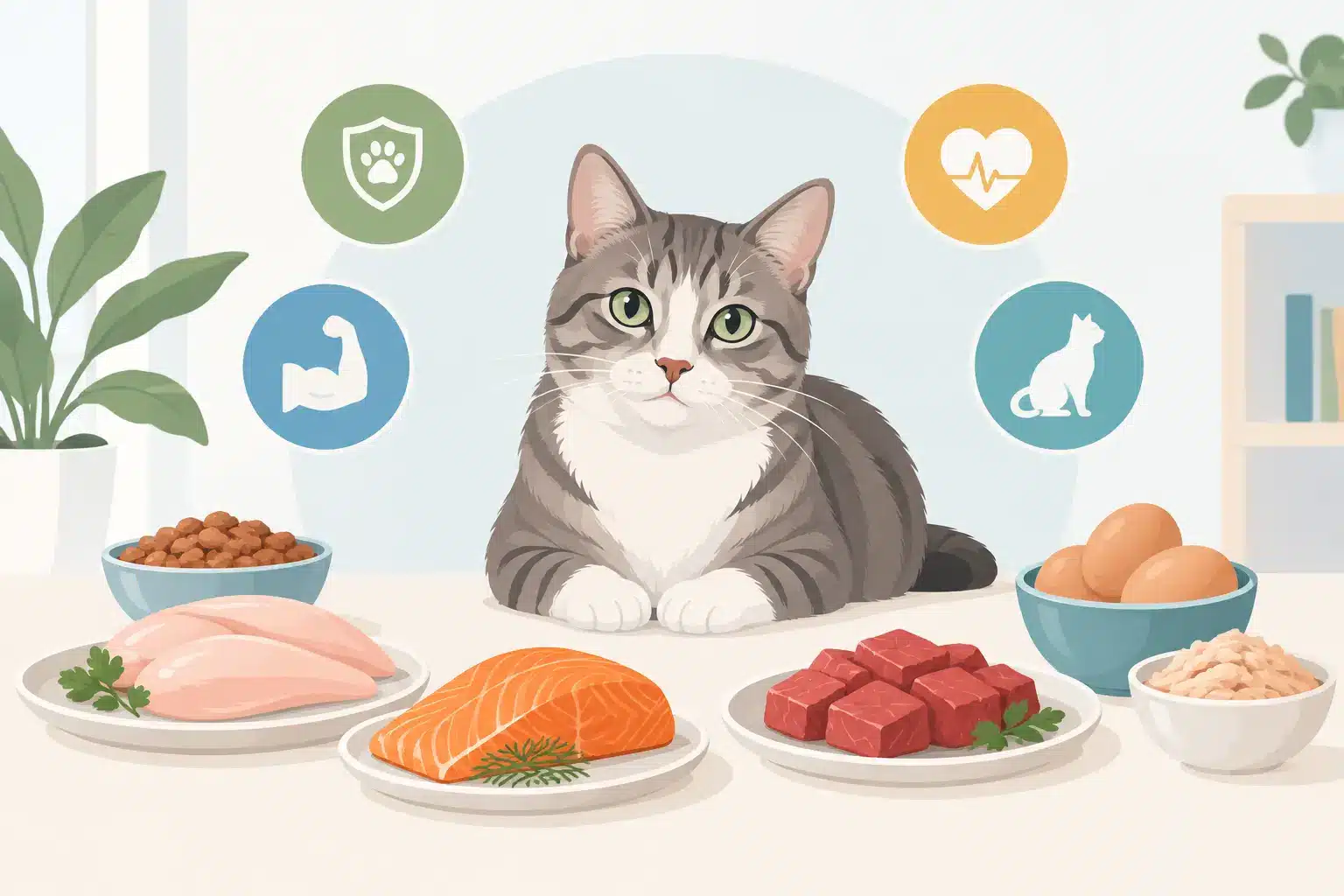
Protein provides essential amino acids that cats cannot make in sufficient amounts on their own. Taurine is especially important for cats and must be supplied through a properly formulated diet. Animal protein sources such as chicken, salmon, duck, and other named meats can help pet parents understand what is in the bowl, but the full nutrient profile matters more than any one ingredient on the front of the bag.
A food can list a desirable protein source and still be unsuitable if it is not complete and balanced. Conversely, a well-formulated recipe may include supporting ingredients such as pumpkin, brown rice, or quinoa to provide energy, fiber, and other nutritional value. Ingredient lists are useful, but they do not tell the entire nutritional story.
Omega Fatty Acids
Omega-3 and omega-6 fatty acids support healthy skin, a shiny coat, and normal cell function. The skin is more than a visible marker of wellness. It is part of your cat’s protective barrier, so dry, flaky skin or a dull coat can be worth discussing with your veterinarian, especially when paired with itching, recurrent ear concerns, or digestive changes.
Fish-based ingredients may contribute omega-3 fatty acids, while other fats provide omega-6 fatty acids. Balance matters. Adding fish oil without veterinary guidance may add unnecessary calories, create digestive upset, or unbalance the overall diet.
Vitamins and Minerals
Vitamin E, vitamin A, certain B vitamins, zinc, selenium, copper, and iron all have roles in normal body function. Yet this is where more is not better. Fat-soluble vitamins and minerals can become harmful at excessive levels. Cats fed a complete and balanced food generally do not need a multivitamin, and adding one “just in case” can create avoidable risk.
If your veterinarian identifies a deficiency or recommends a therapeutic supplement, use the dose and product they recommend. Human supplements are not automatically safe for cats, even when the label looks familiar.
How to Choose Food for Immune and Digestive Support
Start with the nutritional adequacy statement, not the marketing claims. Choose a food formulated for your cat’s age and condition: kittens require nutrition for growth, healthy adult cats need maintenance nutrition, and senior cats may need an individualized plan based on their weight, kidney health, dental comfort, activity level, and other medical considerations.
Then consider your cat’s real-life needs. A cat with sensitive digestion may do better with a consistent formula featuring recognizable ingredients and balanced fiber. A cat who needs help maintaining a healthy weight may benefit from a veterinarian-approved calorie plan. Cats with diagnosed conditions, including food allergies, urinary concerns, kidney disease, or gastrointestinal disease, may need a specific veterinary diet instead of a general wellness formula.
Wet food can be especially helpful for cats that need more moisture in their diets, while dry food offers convenience and can work well for many cats. A mixed feeding plan may suit some households, provided total calories stay appropriate. The best choice is the one your cat eats reliably, digests comfortably, and receives in the correct daily amount.
Make Changes Slowly and Watch the Whole Cat
A sudden switch can upset even a healthy cat’s digestion. When moving to a new food, gradually mix increasing amounts of the new formula with the current food over about seven to 10 days. A more cautious transition may be appropriate for cats with a history of digestive sensitivity.
During the transition, watch stool quality, appetite, energy, grooming, and body weight. Do not judge a food solely by whether your cat eagerly eats the first bowl. Long-term suitability is about consistent intake, comfortable digestion, healthy body condition, and veterinary feedback.
Treats should remain a small part of daily calories. A practical guideline is to keep treats and extras to no more than 10% of your cat’s daily calorie intake, leaving the rest for complete and balanced meals. Table scraps can be calorie-dense, nutritionally incomplete, and sometimes unsafe, so they are rarely helpful for immune support.
When Food Is Not the Only Answer
Nutrition works alongside the basics of preventive care: fresh water, a clean feeding area, regular veterinary exams, parasite prevention when appropriate, dental care, and a low-stress home environment. Chronic stress, poor sleep, crowding, and abrupt routine changes can affect a cat’s overall well-being, including appetite and digestive comfort.
Seek veterinary guidance promptly if your cat has persistent vomiting or diarrhea, unexplained weight change, poor appetite, lethargy, recurrent infections, wounds that heal slowly, breathing changes, or sudden changes in grooming. Cats often hide discomfort, so subtle changes matter.
The most meaningful way to support your cat’s immune health is wonderfully unglamorous: feed a complete, life-stage-appropriate diet, protect digestive consistency, avoid unnecessary supplements, and respond early when something changes. Those steady choices give your cat the nutritional support to feel comfortable, active, and ready for the everyday moments that make a healthy life so rewarding.





Leave A Comment
You must be logged in to post a comment.