

If your dog begs for a carrot stick or your cat sniffs around your plate when you are chopping pumpkin, you are not imagining things. Pet parents often ask what vegetables are good for dogs and cats, and the answer is more nuanced than simply calling vegetables “healthy.” Some can be a smart addition to a balanced diet. Others are better left out entirely.
Vegetables can contribute fiber, moisture, and beneficial nutrients, but dogs and cats do not use them in exactly the same way. Dogs are omnivorous and generally handle a wider variety of plant ingredients. Cats are obligate carnivores, which means their nutritional foundation must come from animal-based ingredients, even if small amounts of certain vegetables can still have a place. That distinction matters when you are choosing treats, toppers, or ingredients in complete and balanced food.
What vegetables are good for dogs and cats?
The best vegetables for dogs and cats are the ones that are safe, easy to digest, and served in appropriate amounts. Pumpkin, carrots, green beans, peas, spinach, and cucumbers are among the most common options. Even then, portion size, preparation, and your pet’s individual digestion all affect whether a vegetable is actually helpful.
For many pets, the main value of vegetables is not that they replace core nutrition. It is that they can complement a thoughtfully formulated diet. Fiber can help support stool quality, fullness, and digestive regularity. Moisture-rich vegetables may also work well for pets who enjoy fresh food additions. Still, more is not better. Too much plant matter can lead to loose stool, gas, or a pet that fills up on extras instead of getting complete nutrition from its regular food.
Pumpkin
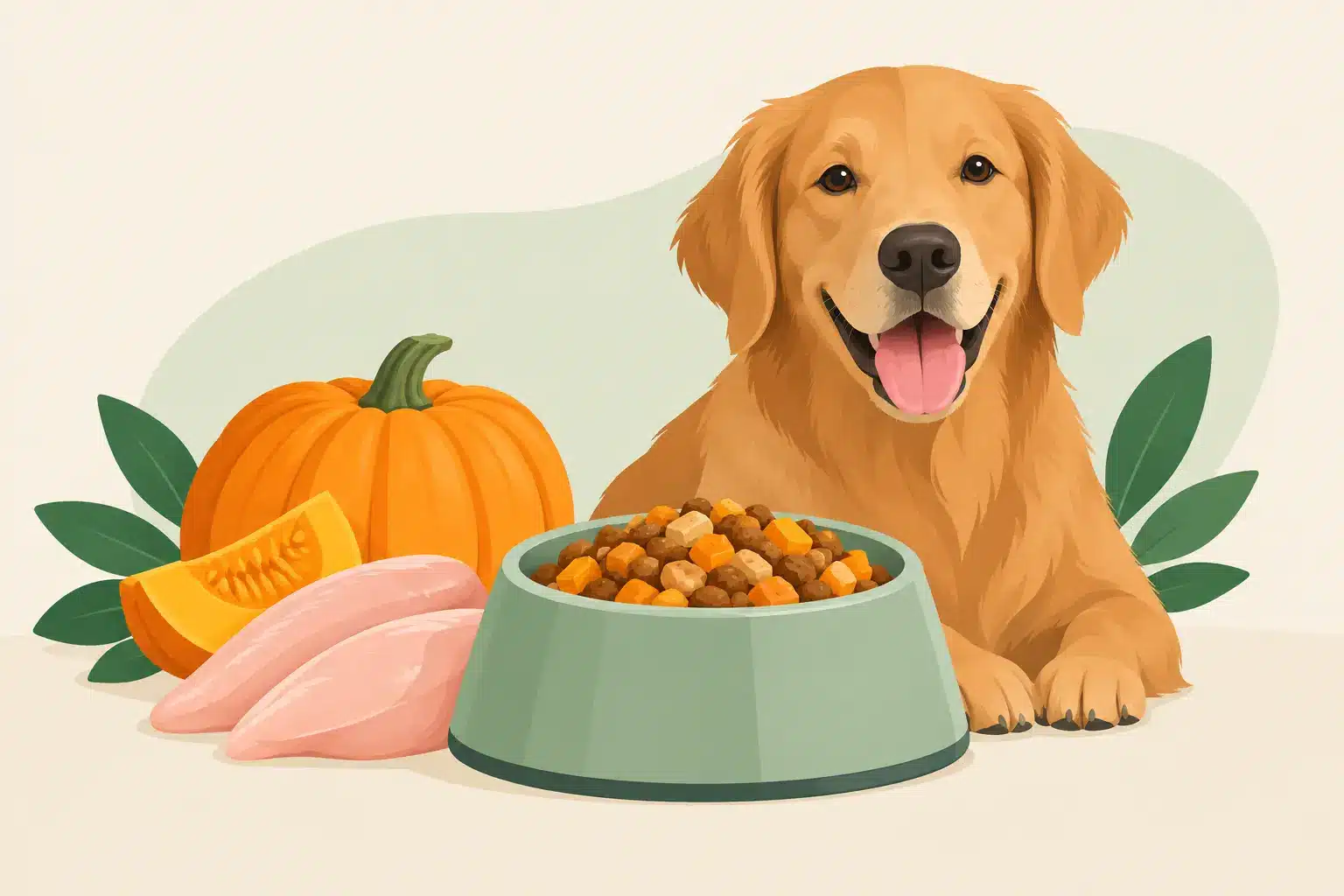
Pumpkin is one of the most useful vegetables for both dogs and cats because it brings gentle fiber and moisture in a form many pets tolerate well. It is commonly used to help support digestive balance and stool consistency. That is one reason pumpkin appears so often in premium pet nutrition conversations.
Plain canned pumpkin or cooked plain pumpkin is usually the best choice. Pumpkin pie filling is not appropriate because it often contains sugar and spices. If your pet has a sensitive stomach, start with a very small amount and see how they respond.
Carrots
Carrots are a popular low-calorie treat for dogs and can also be included in some cat diets in small amounts. They provide fiber and antioxidants, and many dogs enjoy the crunch. For cats, texture is often the deciding factor. Some will accept finely cooked carrots mixed into food, while many will ignore them.
Raw carrots can be fine for some dogs, but cooked or lightly steamed carrots are easier to digest. Large chunks can be a choking risk, especially for eager eaters, so size matters.
Green beans
Green beans are another strong option, especially for dogs that benefit from a satisfying, lower-calorie snack. They are high in water and fiber and can be served plain, steamed, or cut into manageable pieces. Some cats tolerate small amounts as well, though cats are usually less enthusiastic.
Canned green beans can work if they are plain and free from added salt or seasoning. This is a good example of how ingredient labels matter. Vegetables prepared for people often come with extras pets do not need.
Peas
Peas are commonly used in pet foods and are generally safe in moderate amounts for both dogs and cats. They contain fiber, vitamins, and plant-based nutrients. They are best served cooked and plain.
That said, peas should be viewed as one ingredient, not a nutritional shortcut. A pet’s diet still needs to be complete and balanced overall, with the right protein, fat, vitamins, and minerals for the species and life stage.
Spinach and leafy greens
Small amounts of spinach can be appropriate for some dogs and cats, especially when cooked and finely chopped. It contains vitamins and phytonutrients, but this is not a vegetable to overdo. Pets with certain urinary or kidney concerns may need more caution with spinach and other greens that contain oxalates.
This is where the “healthy food” conversation gets more individualized. A vegetable can be nutritious in theory and still be the wrong fit for a specific pet.
Cucumbers and zucchini
Cucumbers and zucchini are mild, low-calorie vegetables that many dogs tolerate well. They can be refreshing, particularly in warm weather, and their high water content can make them an appealing snack. Zucchini is also relatively easy to digest when cooked.
Cats may be less interested, but a small amount of finely chopped cooked zucchini can be acceptable in some cases. Again, the serving should stay modest.
Vegetables dogs usually handle better than cats
Dogs typically do better with a broader range of vegetables because their digestive systems are more adaptable to plant ingredients. That does not mean every dog should eat every vegetable, but it does mean dogs are more likely to enjoy and benefit from small additions like pumpkin, green beans, carrots, peas, or sweet potato.
Cats are different. Because cats rely on animal tissue for essential nutrients, vegetables should never crowd out protein-rich, species-appropriate nutrition. If a cat enjoys a small amount of pumpkin or cooked carrot, that can be fine. But vegetables for cats are extras, not a meaningful nutritional base.
For pet parents, this is an important mindset shift. When asking what vegetables are good for dogs and cats, the answer is not identical for both species. Dogs may use vegetables as useful supplemental ingredients. Cats may simply tolerate certain ones in small amounts.
Vegetables to avoid
Some vegetables are unsafe and should not be offered at all. Onions, garlic, leeks, and chives are toxic to both dogs and cats. Even small amounts can damage red blood cells and create serious health risks.
Corn on the cob is another concern. While plain corn itself may appear in some pet foods, the cob can create a dangerous intestinal blockage. Mushrooms are also tricky. While some store-bought mushrooms may be less risky, wild mushrooms can be toxic, so it is safest to avoid them altogether unless specifically approved by your veterinarian.
Raw potatoes and unripe tomatoes are not good choices, and heavily seasoned vegetable dishes should stay off the menu. Butter, oils, salt, sauces, and spice blends are where many otherwise simple vegetables stop being pet-friendly.
How to serve vegetables safely
The safest way to offer vegetables is plain, soft, and in small portions. Steaming or boiling often works better than serving them raw, especially for pets with sensitive digestion. Cooking can improve digestibility and reduce the chance of choking.
Cut vegetables into bite-sized pieces or mash them into food. For cats, a smooth texture or very fine chop is often more acceptable than chunks. For dogs, frozen vegetables like green beans or small carrot pieces can sometimes be a fun treat, but they should still match the dog’s size and chewing style.
Portion control matters. Treats and toppers, including vegetables, should make up only a small share of daily intake. If you add too much, you can dilute the nutritional balance of the main diet and create digestive upset. Pets with chronic GI issues, pancreatitis, kidney concerns, diabetes, or urinary issues should have dietary changes cleared with a veterinarian first.
Why fiber matters in the bigger picture
When vegetables help, they often help because of fiber. Fiber can support stool quality, regularity, and the health of the digestive environment. But there is a sweet spot. Too little fiber may not do much. Too much can lead to bloating, gas, or stool changes.
That is why balanced formulation matters more than tossing random vegetables into a bowl. In well-designed pet nutrition, fiber sources are selected with purpose to support digestion without compromising the overall nutrient profile. Lucy Pet focuses on this idea through its digestive wellness approach, because gut health is not just about one ingredient. It is about how ingredients work together.
When a vegetable is not the best solution
Sometimes pet parents reach for vegetables because they want to solve a real issue, such as constipation, weight gain, poor stool quality, or a pet that always seems hungry. Vegetables can occasionally help, but they are not a cure-all.
A dog with chronic loose stool may need a more comprehensive diet review, not just extra pumpkin. A cat with recurring digestive trouble should not be managed by trial and error with table food. If symptoms persist, the better next step is to evaluate the total diet, feeding routine, treats, and underlying health factors.
That is especially true if your pet has food sensitivities. Even a safe vegetable can be a poor fit for an individual animal. Start small, watch stool quality, energy, and appetite, and adjust based on what your pet actually tolerates.
The most helpful question is not just what vegetables are good for dogs and cats. It is which vegetables make sense for your specific pet, in the right amount, as part of a complete wellness plan. A thoughtful feeding approach almost always works better than a trendy one.

Leave A Comment
You must be logged in to post a comment.