

A vegetarian diet can be a thoughtful choice for some dogs, but the bag’s front label should never be the deciding factor. When learning how to choose vegetarian dog food, the goal is not simply to avoid meat. It is to select a food that provides complete, digestible nutrition for your dog’s life stage, health needs, activity level, and individual tolerance.
Dogs can digest and use nutrients from carefully formulated plant-based ingredients. Still, they have specific needs for protein, essential amino acids, fats, vitamins, and minerals that must be met consistently. A well-made vegetarian recipe is designed around those needs. A loosely assembled collection of plant ingredients is not the same thing.
Start With Complete and Balanced Nutrition
The first place to look is the nutritional adequacy statement on the package. Choose a vegetarian dog food labeled complete and balanced for your dog’s intended life stage, such as adult maintenance or growth and reproduction. This statement indicates that the food is formulated to meet established nutritional standards when fed as the sole diet.
Life stage matters. Puppies, especially large-breed puppies, need precise mineral and calorie levels to support steady skeletal development. Pregnant or nursing dogs have increased energy and nutrient requirements. Highly active dogs may need more calories and protein than a sedentary companion. An adult-maintenance formula may be an excellent daily choice for a healthy adult dog, but it is not automatically appropriate for every dog in the household.
If your dog has a diagnosed medical condition, including kidney disease, pancreatitis, urinary concerns, chronic gastrointestinal disease, or food-responsive skin issues, involve your veterinarian before making a dietary change. A vegetarian food can be suitable in some situations, but the best choice depends on the diagnosis and the total nutrition plan.
How to Choose Vegetarian Dog Food by Looking Beyond Protein Percentage
A high protein number alone does not tell you whether a recipe will support your dog well. What matters is the quality, digestibility, and amino acid balance of the protein sources, along with the full formula surrounding them.
Plant proteins can come from ingredients such as peas, lentils, chickpeas, soy, potato protein, grains, or combinations of these. Each ingredient contributes differently. A thoughtfully formulated recipe often combines protein sources to help provide a more complete amino acid profile rather than relying heavily on one ingredient.
Dogs require essential amino acids through food, and vegetarian formulas may also include carefully selected supplemental amino acids to meet nutritional targets. This is not a shortcut. It is part of the formulation science that helps ensure a plant-forward recipe delivers dependable daily nutrition.
Look for a manufacturer that is transparent about its nutritional standards, quality controls, and formulation expertise. A recipe developed with veterinary and nutrition expertise offers greater reassurance than one built around a marketing trend. You should also be able to find clear feeding guidance and customer support for questions about the formula.
Give Digestive Health Equal Weight
For many pet parents, the reason to consider a vegetarian diet is tied to food sensitivities or digestive discomfort. While a vegetarian recipe may help some dogs avoid a particular animal protein, it is not automatically the right answer for every sensitive stomach. Dogs can react to many ingredients, and digestive trouble may have causes beyond food.
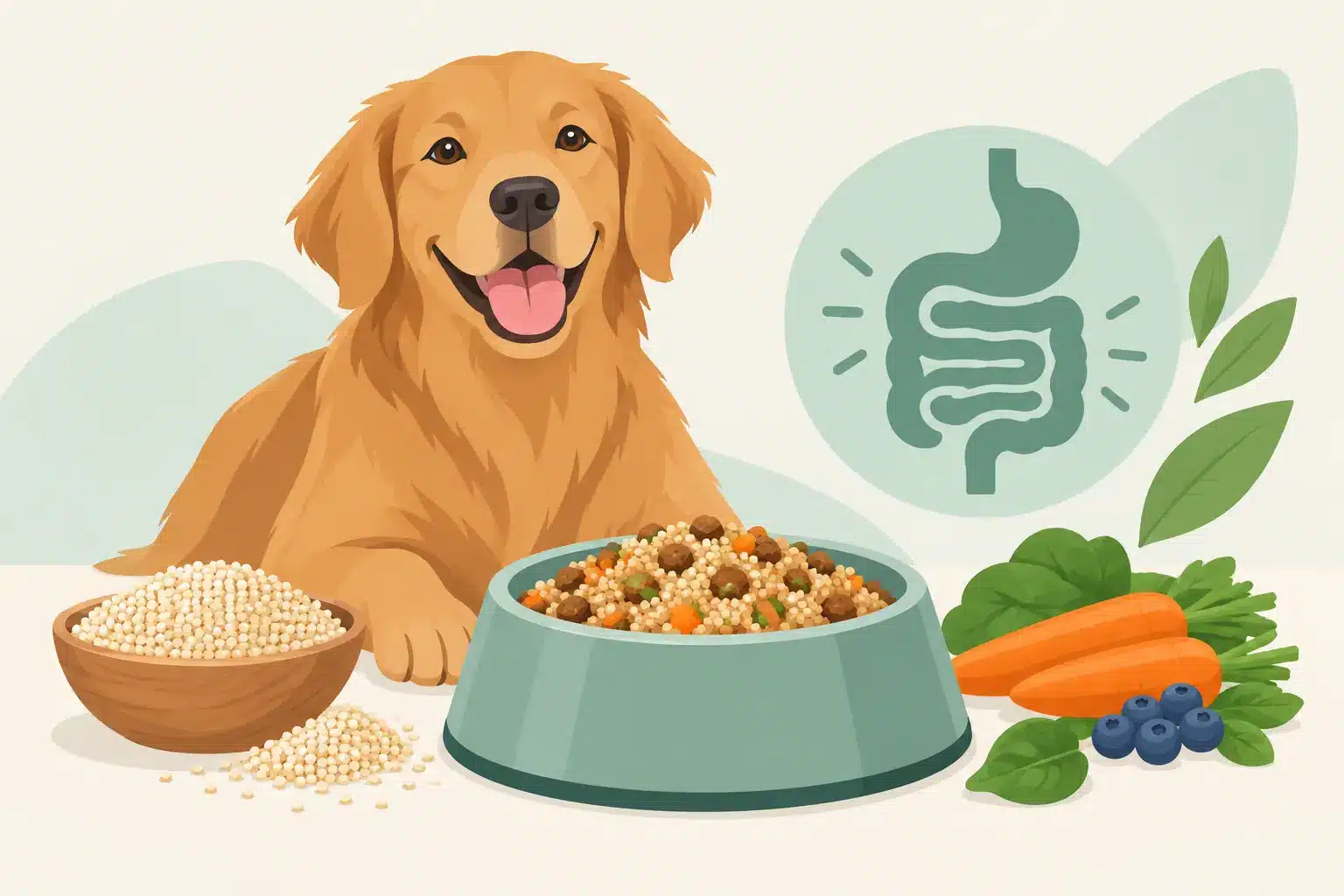
A good vegetarian dog food should be designed with digestibility in mind. Balanced fiber can support regular stool quality and help nourish beneficial gut bacteria, but excessive fiber or an abrupt diet change may lead to gas, loose stool, or frequent bowel movements. The right amount depends on the individual dog.
Consider recipes that include recognizable sources of fiber and carbohydrates, such as pumpkin, brown rice, quinoa, or other carefully selected ingredients, when they fit your dog’s needs. At Lucy Pet, the P.B.F. Prebiotic Balanced Fiber™ approach reflects the role that balanced fiber can play in digestive wellness and whole-body health.
Pay attention to your dog’s response after any transition. Healthy digestion is not just about avoiding vomiting or diarrhea. It also includes predictable stools, a comfortable appetite, steady energy, and a dog who seems comfortable after meals.
Read the Ingredient List With Context
Ingredient lists are useful, but they should not be judged by the first ingredient alone. Ingredients are listed by weight before processing, which does not show the complete nutritional contribution of the finished food. A recipe with a recognizable first ingredient can still be poorly balanced, while a scientifically formulated recipe may use supplements that are essential to nutritional completeness.
Instead, assess the formula as a whole. Look for named plant ingredients, a clear source of dietary fat, and a full vitamin and mineral package. Added vitamins and minerals are expected in complete dog food, particularly in vegetarian recipes where certain nutrients need to be supplied with precision.
You may see nutrients such as vitamin B12, vitamin D, zinc, iron, taurine, and L-carnitine listed among the ingredients. Their presence can reflect careful formulation. Do not assume that a shorter ingredient list is always better if it comes at the expense of nutrient coverage or quality control.
Be wary of broad claims that suggest every dog needs a meat-free diet or that meat is inherently harmful. Nutrition is individual. The best diet is the one that is complete, safe, well tolerated, and appropriate for your dog.
Consider Fat, Calories, and Skin and Coat Support
Dogs need dietary fat for energy, healthy skin, coat condition, and the absorption of certain vitamins. Vegetarian diets can provide essential fatty acids through vegetable oils, seeds, algae-derived ingredients, and other sources, but the complete fatty acid profile matters more than any single ingredient.
Check the calorie content as well as the feeding chart. Some vegetarian foods are more calorie-dense than others. A dog who gains weight on a new food may simply be receiving too much of it, while an active dog losing condition may need more calories or a different formula. Use your dog’s body condition, not a measuring cup alone, to guide adjustments.
A healthy coat should look glossy without feeling greasy, and skin should remain comfortable rather than flaky or itchy. Changes in coat quality can take several weeks to become noticeable, so give a suitable new food time while monitoring your dog closely.
Know When Grain-Free Is and Is Not Necessary
Vegetarian and grain-free are separate decisions. Some vegetarian dog foods include grains, while others do not. Unless your veterinarian has identified a specific reason to avoid grains, whole grains can be useful sources of digestible carbohydrates, fiber, and nutrients.
Grain-free formulas may suit certain dogs, but they are not automatically healthier. If you are choosing a grain-free vegetarian recipe, ask why it is the better fit for your dog. Focus on its nutritional adequacy, ingredient quality, digestibility, and your veterinarian’s guidance rather than choosing based on a grain-free claim alone.
This is especially relevant for dogs with heart health concerns. Canine heart disease is complex, and diet-related questions deserve a conversation with your veterinarian. Do not make major dietary decisions based on online anecdotes or fear-driven ingredient lists.
Transition Slowly and Monitor the Results
Even an excellent food can upset a dog’s stomach if introduced too quickly. Plan to transition over about seven to 10 days, starting with a small portion of the new food mixed into the current diet and gradually increasing the new food each day. Dogs with sensitive digestion may benefit from an even slower transition.
During the change, monitor stool consistency, appetite, water intake, energy, scratching, ear irritation, and body weight. A brief, mild change in stool can happen during a transition, but ongoing diarrhea, vomiting, refusal to eat, pronounced itching, or lethargy calls for a pause and veterinary advice.
Avoid changing several things at once. If you introduce new treats, supplements, chews, and food during the same week, it becomes difficult to know what is helping or causing a problem. Keep treats simple and account for them in your dog’s daily calories.
A vegetarian dog food should feel like a confident nutritional choice, not a compromise. Choose a complete and balanced formula, introduce it patiently, and let your dog’s digestion, energy, body condition, skin, and coat help tell the story over time.





Leave A Comment
You must be logged in to post a comment.