

A salmon recipe can look like an easy choice at the pet food shelf: cats often love the flavor, and salmon has a healthy reputation. But knowing how to choose salmon cat food means looking beyond the front-of-bag fish image. The best recipe for your cat should deliver complete daily nutrition, suit their life stage, and support the digestion that affects everything from stool quality to skin, coat, and energy.
Salmon can be an excellent animal-protein ingredient in cat food. Still, the right formula depends on the full nutritional picture, not salmon alone. Here is how to assess it with confidence.
Start With Complete and Balanced Nutrition
Cats are obligate carnivores. They need nutrients that are naturally concentrated in animal-based ingredients, including amino acids such as taurine, along with appropriate levels of protein and fat. A food that simply contains salmon is not automatically designed to meet all of those needs.
Look for a nutritional adequacy statement that says the food is complete and balanced for your cat’s intended life stage. A kitten has different nutritional demands than an adult cat, while pregnant or nursing cats have increased needs as well. Feeding a recipe formulated for the wrong stage can leave an otherwise high-quality food poorly matched to your cat.
If salmon cat food is intended as your cat’s primary meal, complete and balanced nutrition is non-negotiable. Treats, toppers, and supplemental foods can add variety, but they should not replace a carefully formulated daily diet unless your veterinarian has recommended a specific home-prepared plan.
Read the Ingredient List With Context
A recognizable animal protein near the top of the ingredient list is a good place to begin. Salmon provides protein and naturally occurring fatty acids, and many cats find it highly palatable. However, a sound ingredient review goes beyond finding one appealing ingredient.
Consider what follows the salmon. Other animal proteins may help create a more complete amino acid profile, while thoughtfully selected carbohydrates and fibers can serve functional roles in a recipe. Cats do not need a trendy ingredient list. They need a formula that is purposeful, nutritionally complete, and made with ingredients you feel good about feeding.
Also, do not judge a food solely by whether it includes grains. Some cats do well with grain-inclusive recipes, while others may do better with a grain-free option based on individual tolerance and a veterinarian’s guidance. Grain-free is not inherently better, and grains are not automatically a concern. The more useful question is whether the entire recipe supports your particular cat’s health and digestion.
Choose Salmon Cat Food for Your Cat’s Life Stage
A food’s label should make its intended life stage clear. Kittens need concentrated energy and nutrients to support rapid growth. Adult cats generally need a maintenance diet that supports a healthy body condition. Senior cats may benefit from closer attention to protein quality, calorie intake, hydration, and any age-related changes identified by their veterinarian.
Lifestyle matters, too. An indoor cat with a lower activity level may need careful portion control, even when eating a premium salmon formula. A highly active young cat may have different calorie needs. The right food and the right amount work together. Use feeding guidelines as a starting point, then adjust based on your cat’s body condition, activity level, and veterinary advice.
Look for Digestive Support, Not Just Great Taste
A cat may eagerly eat a new food and still not thrive on it. Digestive comfort is one of the clearest ways to evaluate whether a formula is working over time. Consistent, well-formed stools, a healthy appetite, and a comfortable belly are practical signs to watch.
Fiber deserves special attention because the type and balance matter. The right blend can help support healthy digestion and regularity without making a cat food unnecessarily bulky. Prebiotics can also help nourish beneficial gut bacteria, supporting a healthier digestive environment.
Lucy Pet’s Formulas for Life® approach includes P.B.F. Prebiotic Balanced Fiber™, designed to support digestive health as part of a complete nutritional strategy. When comparing foods, look for the same level of thoughtfulness: a recipe that considers the gut, rather than treating digestion as an afterthought.
Consider Skin, Coat, and Fatty Acids
Salmon is often chosen for its omega fatty acids, which can help support healthy skin and a soft, glossy coat as part of a balanced diet. That benefit is real, but it is not a reason to overlook the rest of the formula. A food must provide appropriate overall nutrition, not just one appealing nutrient.
Pay attention to changes over several weeks rather than expecting overnight results. Your cat’s coat should feel soft and look healthy, while their skin should be comfortable and free from unusual flaking or irritation. Persistent scratching, bald patches, ear issues, or skin inflammation deserve a veterinary conversation. These signs can have many causes, including parasites, environmental triggers, or medical conditions.
Be Careful With Food Sensitivity Assumptions
When a cat has vomiting, loose stool, itchy skin, or frequent ear irritation, it is tempting to blame a single ingredient and switch foods repeatedly. Salmon can be a suitable choice for many cats, but it can also be one protein among several that does not agree with an individual pet.
Food sensitivities are difficult to diagnose from symptoms alone. Rapidly changing foods can make the problem harder to understand and may upset the digestive tract further. If you suspect a food-related issue, talk with your veterinarian before choosing a limited-ingredient or novel-protein diet. They can help rule out other causes and recommend an appropriate elimination diet when needed.
Compare Dry and Wet Salmon Cat Food Thoughtfully
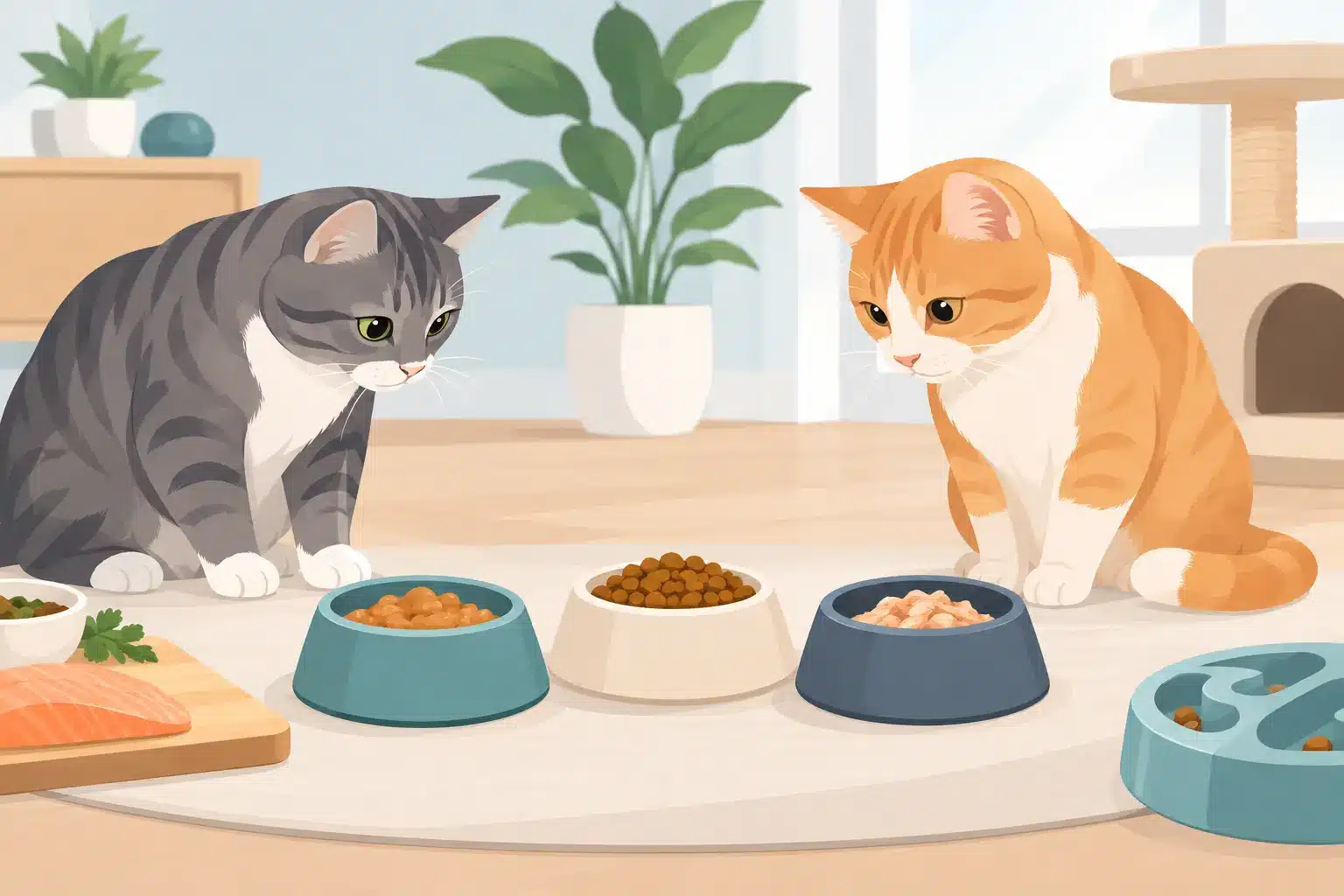
Dry and wet foods can both have a place in a cat’s feeding routine. Dry kibble is convenient, easy to portion, and can work well for daily feeding. Wet food generally provides more moisture, which may be useful for cats that do not drink enough water on their own.
The best choice depends on your cat’s preferences, hydration habits, health history, budget, and feeding routine. Some families feed a combination of complete and balanced dry and wet foods for variety and moisture. If you mix formats, account for total daily calories rather than serving a full portion of each.
Fresh, clean water should always be available, regardless of the diet you choose. A cat’s water intake can be influenced by food moisture, the location of the bowl, and personal preference, so simple changes such as offering several water stations can be helpful.
Know How to Read the Guaranteed Analysis
The guaranteed analysis gives you a baseline view of minimum crude protein and fat and maximum fiber and moisture. It is useful, but it does not tell the whole story. Because wet food contains much more water than dry food, comparing the percentages directly can be misleading.
For a closer comparison, ask your veterinarian or the manufacturer for nutrient information on a dry matter basis and for calorie content. Calories are especially valuable when managing weight. A nutrient-dense salmon recipe may require a smaller serving than a less calorie-dense food, so the scoop size alone is not a reliable measure.
Transition Slowly and Watch Your Cat
Even an excellent salmon cat food should be introduced gradually. A sudden food change can cause loose stools or refusal to eat, particularly in cats with sensitive digestion. Over about seven to 10 days, mix increasing amounts of the new food with decreasing amounts of the previous food. A more gradual transition may be appropriate for sensitive cats.
As you transition, monitor four practical markers:
- Appetite and willingness to eat
- Stool consistency and litter box frequency
- Vomiting, gas, or signs of discomfort
- Energy, coat condition, and body weight
Contact your veterinarian promptly if your cat stops eating, vomits repeatedly, develops diarrhea that persists, or seems lethargic. Cats can become seriously ill when they do not eat for even a short period, particularly if they are overweight or have an underlying health condition.
A Better Choice Is One Your Cat Can Thrive On
The goal is not to find the salmon cat food with the most dramatic marketing claim. It is to choose a complete, carefully formulated recipe that your cat enjoys, digests comfortably, and can eat consistently at the right portion size. Let the label, your cat’s life stage, and their day-to-day well-being guide the decision. A bowl that supports a comfortable gut, healthy coat, steady energy, and happy mealtimes is a meaningful investment in the years you share.





Leave A Comment
You must be logged in to post a comment.